
Nobody asks about the glue.
They ask about the wood. The price. The size. Whether we ship to their province. The glue question almost never comes up.
It should. Here’s why.
What’s Actually in the Boards
The boards we source are made with Titebond III Ultimate Wood Glue. That’s the industry standard for cutting boards and food-contact wood products. Has been for a long time.
We didn’t land on this by accident. When we started working with suppliers back in 2016 the glue question was one of the things we asked. A board with good wood and bad adhesive is still a bad board. We weren’t interested in selling those.
Titebond III is FDA compliant for indirect food contact, fully waterproof, and creates a bond stronger than the wood fibres around it. Those three things matter for a cutting board and nothing else we looked at checked all three boxes the same way.
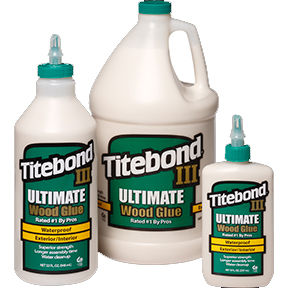
Titebond III Ultimate Wood Glue
FDA Compliant
Meets FDA requirements for indirect food contact. The standard for cutting boards going into food environments.
Fully Waterproof
Not water resistant — waterproof. Holds through years of washing without delaminating.
Stronger Than the Wood
Bond strength exceeds the wood fibres around it. The joint is never the weak point.
Industry Standard
The adhesive professional woodworkers and cutting board suppliers have relied on for years.
Why the Glue Line Matters More Than People Think
A glued cutting board has adhesive running through it. Not just on the edges. Through the surface. Every glue line on a face-grain or end-grain board is part of the working surface — the part that sees knives, water, food, washing, and more knives.
If that adhesive isn’t food-safe, the problem isn’t abstract. It’s right there on the surface every time someone uses the board.
Titebond III meets FDA requirements for indirect food contact. That’s the standard for surfaces that touch food without being a food ingredient themselves. A cutting board is exactly that situation. For restaurants especially, this isn’t a nice-to-have — it’s what a health inspector is going to want to know about if they ask.
The waterproof part matters too. People wash cutting boards. A lot. An adhesive that breaks down under repeated water exposure is how boards delaminate. Pieces start separating. What looked like a solid board starts coming apart at the glue lines. Titebond III doesn’t do that. The bond holds under normal use for years.
Who Actually Cares About This
Restaurants care about it most. Health inspectors ask about food contact surfaces and a board made with FDA-compliant adhesive is the right answer. If you’re buying cutting boards for a commercial kitchen and you can’t answer the glue question, that’s a gap worth closing. The restaurants page has more on what commercial kitchen buyers look for.
Resin artists and pyrography artists care about it differently. The glue line runs across your working surface. On a burning tip or a resin pour that line is right there. Titebond III cures hard and consistent — behaves like the wood around it rather than doing something different. That matters when you’re working across the whole surface.
Laser engravers run a beam across glue lines. Same thing — you want the adhesive to behave predictably on the machine. Ours does. The laser engravers page covers what engravers look for in a blank if you want the full picture.
Corporate gifting and realtor closing gifts — honestly most buyers in these segments never think about glue. But they notice when a board falls apart two years later. Or doesn’t. Titebond III is one of those details that shows up in how long the product holds together. Good suppliers use it. We make sure ours do.
Restaurants
Health code compliance. FDA-compliant adhesive matters here more than anywhere.
Laser Engravers
Glue lines cross the work surface. Consistent adhesive means predictable results on the machine.
Resin Artists
Glue cures hard and consistent. No surprises under a resin pour.
Pyrography Artists
Burning across glue lines needs consistent adhesive. Titebond III behaves like the wood around it.
Corporate Gifting
Nobody notices the glue until the board falls apart. Titebond III means it doesn’t.
Realtors
A closing gift that holds together for years says more than one that doesn’t.
The Short Version
Titebond III Ultimate Wood Glue. FDA compliant for indirect food contact. Waterproof. Stronger than the wood around it. That’s what’s holding your boards together. Worth knowing before you buy.
FAQ
Is Titebond III actually food safe once it’s cured?
Yes. Certified food safe by the FDA once fully cured, which is exactly why it’s used in cutting board construction instead of just any wood glue. That certification matters here since the glue line sits in direct contact with food every single time the board gets used.
Does the glue line ever actually touch food during normal use?
Only if a board’s deeply scored or the wood around the joint wears down after years of heavy use. A properly bonded glue line sits below the cutting surface. The wood takes the wear from knife strokes long before the adhesive’s ever exposed.
Why not just use any waterproof glue if it’s for a cutting board?
Waterproof and food safe aren’t the same thing. Titebond III happens to be both, which is part of why it’s the industry standard here. Some waterproof adhesives aren’t rated for food contact at all. Using one just because it resists water misses the actual point for something that touches food every day.
Does a lot of washing break the glue down over time?
Not with normal care. Titebond III holds up fine under regular washing and typical kitchen humidity, which is why it’s rated for this specific use instead of general woodworking. What actually shortens a glue line’s life is soaking a board or running it through a dishwasher, not standard hand washing. Our restaurant sourcing guide covers care and maintenance for boards seeing heavy daily use in a commercial kitchen.
Browse the full product catalogue or request a quote. Canadian maple, cherry, and walnut wholesale. Minimum 24 boards per SKU. Allen or Penny will answer.