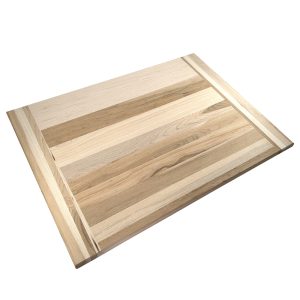
bread kneading board
Bread Kneading Boards
Kneading is a wrestling match. You push, fold, turn, and lean your whole weight into a sticky mass that fights back. The board takes all of it.
A flimsy surface slides around while you work. And it flexes under your hands. A board that flexes is a board that cracks eventually, so you want something that just sits there and absorbs the beating.
These are built for that one job. Canadian maple, cherry, walnut. Sourced to stand still while you knead.
Maple’s the classic. Tight grain, smooth face, dense enough that dough won’t sink in and stick. Flour it lightly and the dough releases clean. Most bakers default to it and never look back.
Cherry feels a little softer and carries a warm reddish tone that deepens over the years. Walnut? That’s the tank. Heavy, dark, immovable, even when you’re getting rough with a stiff rye.
Why Density Matters for Kneading
Soft board. You lean in, it gives, the surface flexes, and one day that flex becomes a split down the middle. Dense board does none of that. Cold winters here mean slow-growing trees, slow growth means tight rings, and tight rings mean a board that won’t flex, won’t dent, won’t soak up the moisture from a wet dough. It holds firm. Firmness is the whole reason a kneading board exists.
A Few Practical Notes
Flour it first and the dough lifts away clean. The surface is flat and generous, so you’ve got room to fold and stretch without dough running off the edge. Done for the day? Scrape, wipe, ready for tomor