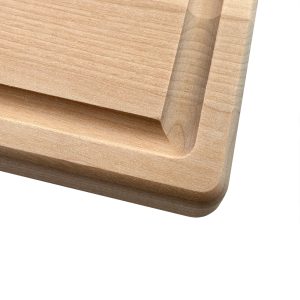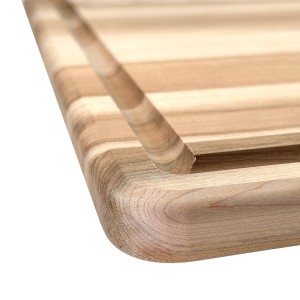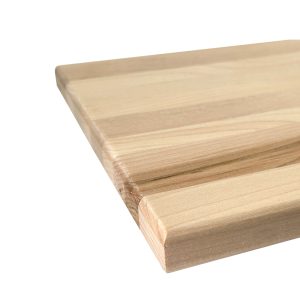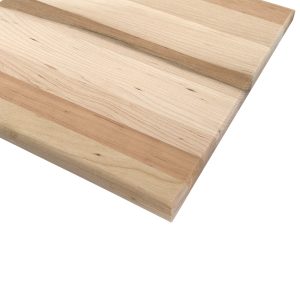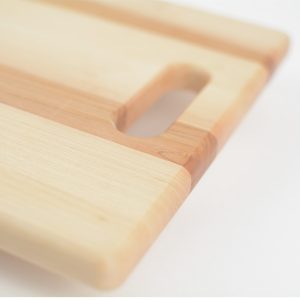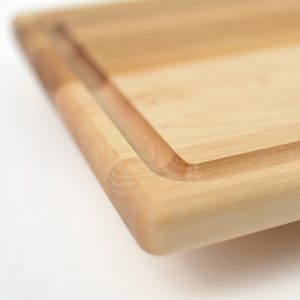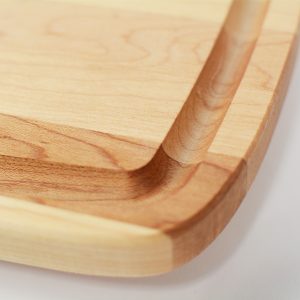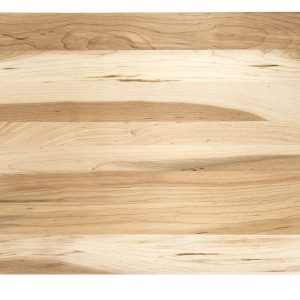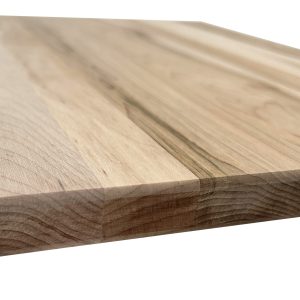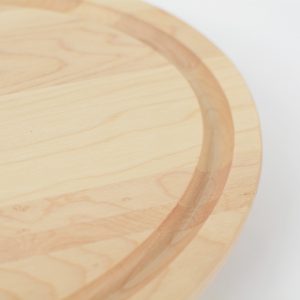
carving board
Carving Boards
Carving a roast is a wet job. A holiday bird, a prime rib, a leg of lamb, they all let go of juice the second the knife goes in. You want a board with room to rest the meat, slice it, and keep the work in one place instead of fighting for counter space.
That’s the whole point. Not a prep board that happens to be big. A board built for resting and slicing meat.
Maple, cherry, walnut, all Canadian. For something that takes a carving knife and holds a heavy roast, density earns its keep.
Durable and standard, maple is hard, pale, and tight-grained, tough enough to take repeated carving before it scars up. Cherry warms the look for a board that travels from kitchen to table. And walnut, the premium one, dark and dense and heavy, anchors itself to the counter while you work through a big cut.
Why Density Matters
Why does the wood need to be dense here? Because the board takes a beating. You’re bearing down with a knife on a heavy roast. A soft board flexes under that, dents, and starts to wear. Dense hardwood doesn’t. Slow-grown northern trees, tight packed grain, a surface that stays flat and solid through roast after roast without cupping or thinning out.
Weight and Size
Weight matters as much as hardness. A heavy board plants itself on the counter and doesn’t slide while you carve, which is exactly what you want with a knife in one hand and a roast in the other. These run generous in size too, giving the meat room to rest and the knife room to work.
Where They Come Out
Where do these come out? Holiday dinners and the big bird. Restaurant meat service and carving stations. Catered events plating roasts. Retail heading into the holidays. Wherever a roast gets sliced, this is the board.
Order Basics
Wholesale only. 24-board minimum per SKU. For restaurants, caterers, and retailers, not a single board for the home counter. Mix species and sizes across the order.
Stocking carving boards? Request a wholesale quote with your species, sizes, and quantities, and pricing comes back fast.