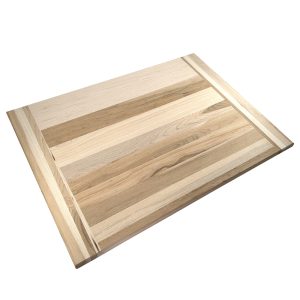
hardwood pastry board
Hardwood Pastry Boards
Pastry is fussy work. Cold butter, thin layers, dough that turns sticky the second it warms up. Your work surface either helps you hold control or fights you the whole way.
Cheap surfaces quit at the worst moment. Plastic warms fast and the dough goes tacky. A thin board flexes the instant you lean into the pin. Hardwood does neither. It sits there, flat and solid, and lets you think about the pastry instead of the bench.
Canadian maple, cherry, walnut. We source them, we don’t make them, and dense northern hardwood happens to be exactly what delicate work wants underneath it.
Maple’s the standard. Why? Tight smooth grain, so a light flouring keeps laminated dough from grabbing. Roll thin, fold, turn. Your layers stay intact instead of tearing.
Cherry’s a touch softer with that warm reddish colour, nice if the board pulls double duty as a serving piece. Then walnut, dense and dark and heavy, the one that won’t shift under a hard roll.
Why Density Pays Off for Pastry
Pastry hates two things. Heat and moisture. Dense hardwood pushes back on both. It stays cooler to the touch than plastic, and that buys you time before the butter goes soft. It also won’t drink up moisture from the dough, so no swelling, no cupping. Slow-grown trees, tight rings, hard surface. That’s the cool, flat bench pastry wants.
What Happens on the Board
Pie crust rolled paper-thin. Croissant dough through its turns. Tart shells. Crimping, cutting, a dusting of sugar. The whole delicate process happens right here, and then it wipes clean for the next round.
Ordering
Wholesale only. 24 boards minimum per SKU. For bakeries, patisseries, pastry kitchens, and retailers, not a single board for home. Mix species and sizes across the order.
Need pastry boards spec’d for your kitchen? Request a wholesale quote with your species, sizes, and quantities, and pricing comes back fast.