
Where the Wood Comes From
We’re based in Quebec. That’s not a coincidence. Quebec sits in the middle of one of the best hardwood growing regions in North America. The climate does something that warmer regions can’t replicate — cold winters and short growing seasons force hardwood trees to grow slowly. Slow growth means tight grain. Tight grain means denser, harder wood. That density is exactly what makes Canadian maple perform the way it does in a cutting board, a laser engraver’s studio, or a resin artist’s workspace. The maple, cherry, and walnut we source come from Canadian hardwood suppliers. Not imported. Not a mix of domestic and overseas wood blended together. Canadian hardwood, sourced properly, the same way we’ve been doing it since 2016.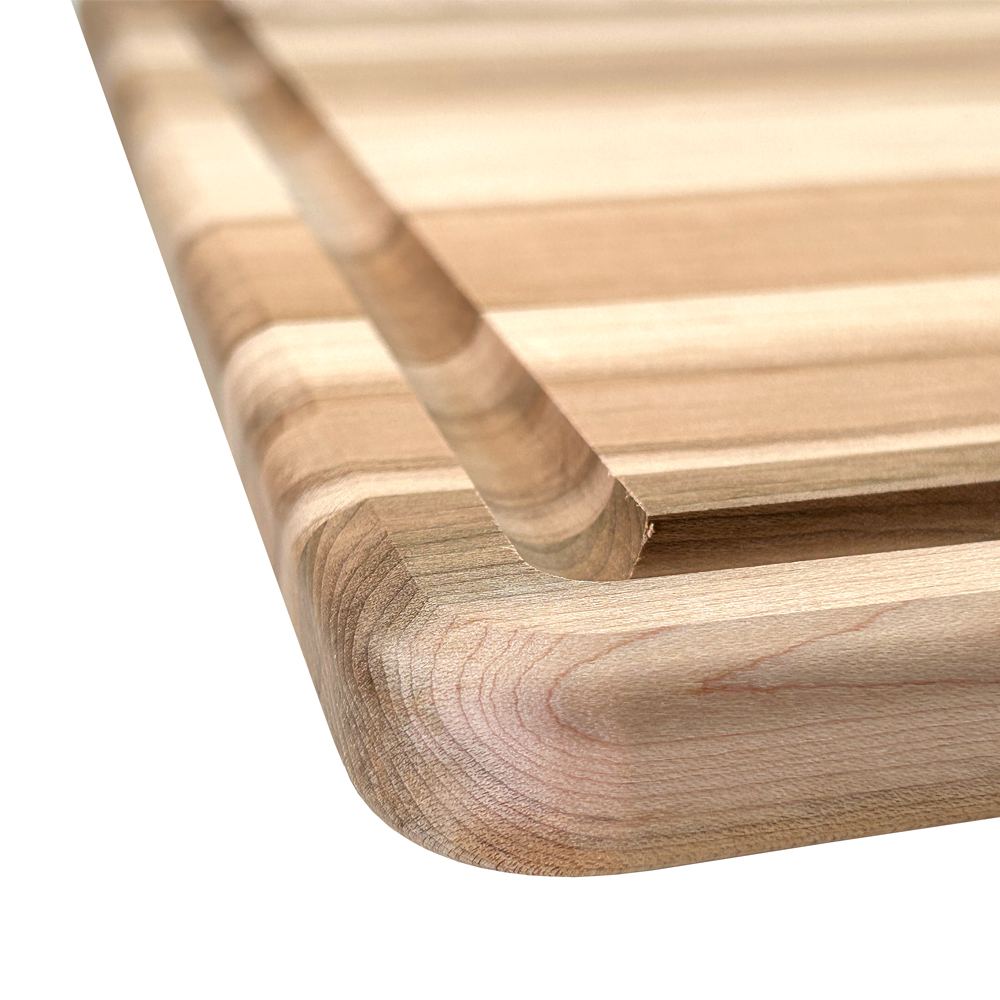
Large cutting meat cutting board with a juice groove.
Why Canadian Maple Specifically
Maple is the gold standard for cutting boards and it’s not a close competition. Hard maple — the species that grows across Quebec and Ontario — scores around 1450 on the Janka hardness scale. That’s harder than cherry, harder than walnut, harder than most of the woods used in cutting boards sold at retail. It resists surface scoring better than softer wood, holds up under daily use in a commercial kitchen, and takes laser engraving cleanly because the tight grain doesn’t do unexpected things when the laser hits it. The light colour is also part of why it works so well as a blank for engraving and resin art. Contrast shows up sharply. A dark logo or a coloured resin pour reads cleanly against the creamy maple surface in a way that wouldn’t work the same on a darker wood. None of that happens without the climate. The cold is what makes the wood what it is.Janka Hardness — Canadian Hardwoods We Carry
Higher score = harder wood = more resistant to surface scoring
Maple
1,450
Walnut
1,010
Cherry
950
Janka scale measures resistance to surface denting and wear. Hard maple at 1,450 is one of the hardest domestic hardwoods in North America.
Cherry and Walnut
Maple is the workhorse but it’s not the only Canadian hardwood worth knowing about. Cherry grows across eastern Canada and has a warm reddish tone that deepens over time. It’s softer than maple but still a proper hardwood. For cutting boards used in lower-intensity situations — serving, presentation, resin art where the wood grain is meant to show through — cherry is genuinely beautiful. It’s less common than maple in most wholesale catalogues which is part of why finished pieces made on cherry actually stand out. Walnut is the premium option. Darker, heavier, and it looks expensive the moment someone picks it up. The grain pattern under a clear resin pour is dramatic in a way maple can’t match. For corporate gifts, high-end closing gifts, or any situation where the board is meant to make an impression, walnut earns its price. All three species are Canadian. All three are available from us in wholesale quantities.Maple
Light and creamy. Hardest of the three. Best engraving contrast. Most consistent batch to batch.
Best for: most applications, high-volume orders
Cherry
Warm reddish tone that deepens with age. Less common. Beautiful grain under clear resin.
Best for: gifts, resin art, serving boards
Walnut
Rich dark brown, heavy, premium feel. Dramatic grain pattern. Looks expensive because it is.
Best for: corporate gifts, luxury pieces, resin art